
The Art Chapel

Location
Lincoln Nebraska
Clients
The F Steet Community Church
Partners
Jean Stryker, Creative Arts Director, F Street Neighborhood Church
Jeff Heerspink, Pastor, F Street Neighborhood Church
Willow Applegate, Art Chapel Director,F Street Neighborhood Church
David Crouse, Superintendent, Crounse Construction
Brendan Crounse, General Contractor, Crounse Construction
Jerry Reif, Assistant Director, Nebraska Innovation Studio
The Art Chapel is a PLAIN–FACT collaboration to convert a 19th-century single-room chapel into an art studio for the South Downtown neighbourhood of Lincoln. The new facility provides studio space for adults to cultivate their creativity through art and craft instruction, supporting public events in a community with few cultural outlets. It is an extension of the F Street Neighborhood Church’s engagement program with a community that has high incidents of homelessness, crime, and substance abuse disorder.

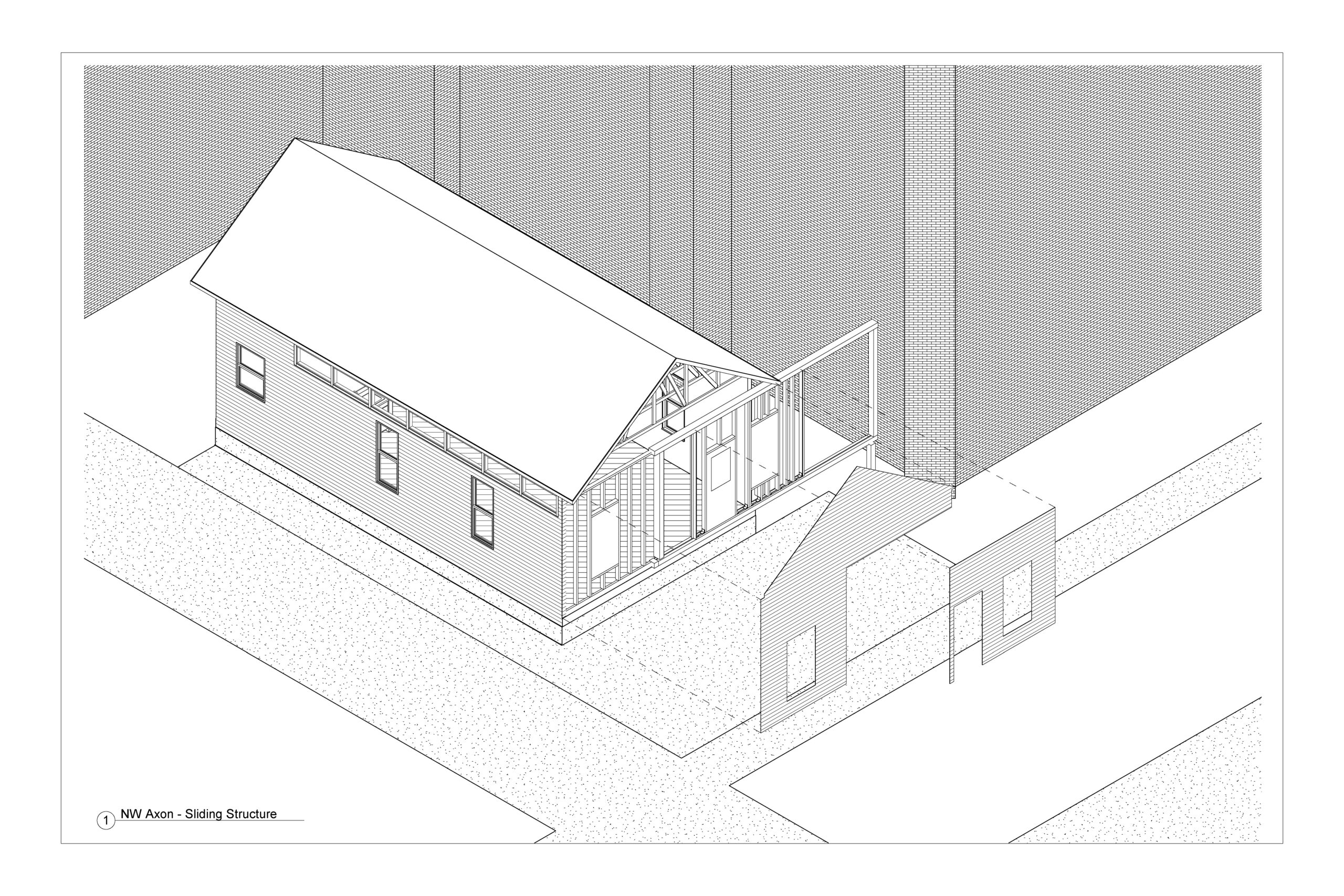
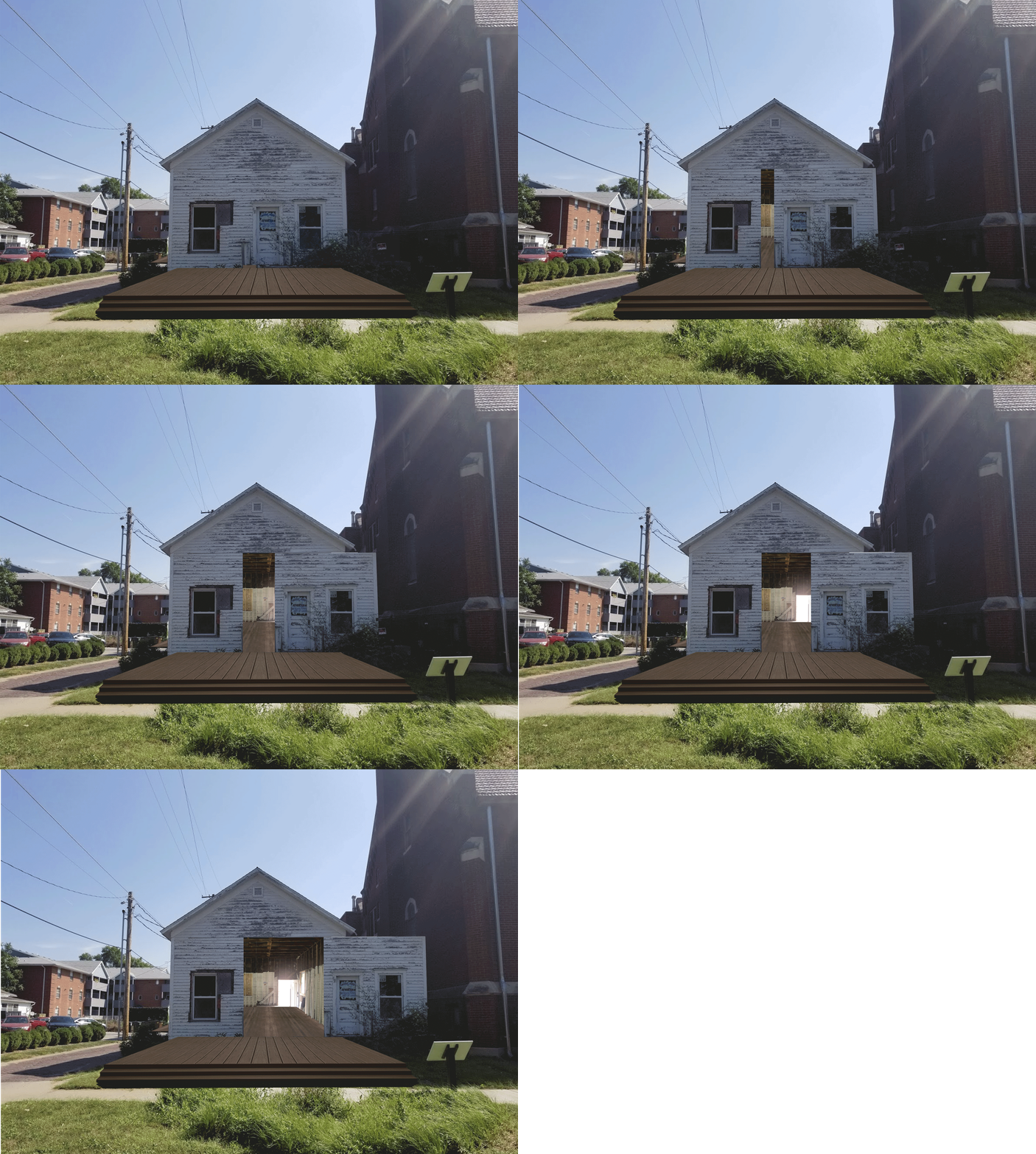
The primary design acts are subtractive – removing material and abstracting the building to highlight generic qualities and simple beauty. A large “rolling wall” replicates the original façade and opens the Art Chapel to the community both literally and figuratively. Inspired by the subtle way members of the community are invited to gather for services informally in the car park and on the church steps, the rolling wall makes the entire building an extension of the public realm.


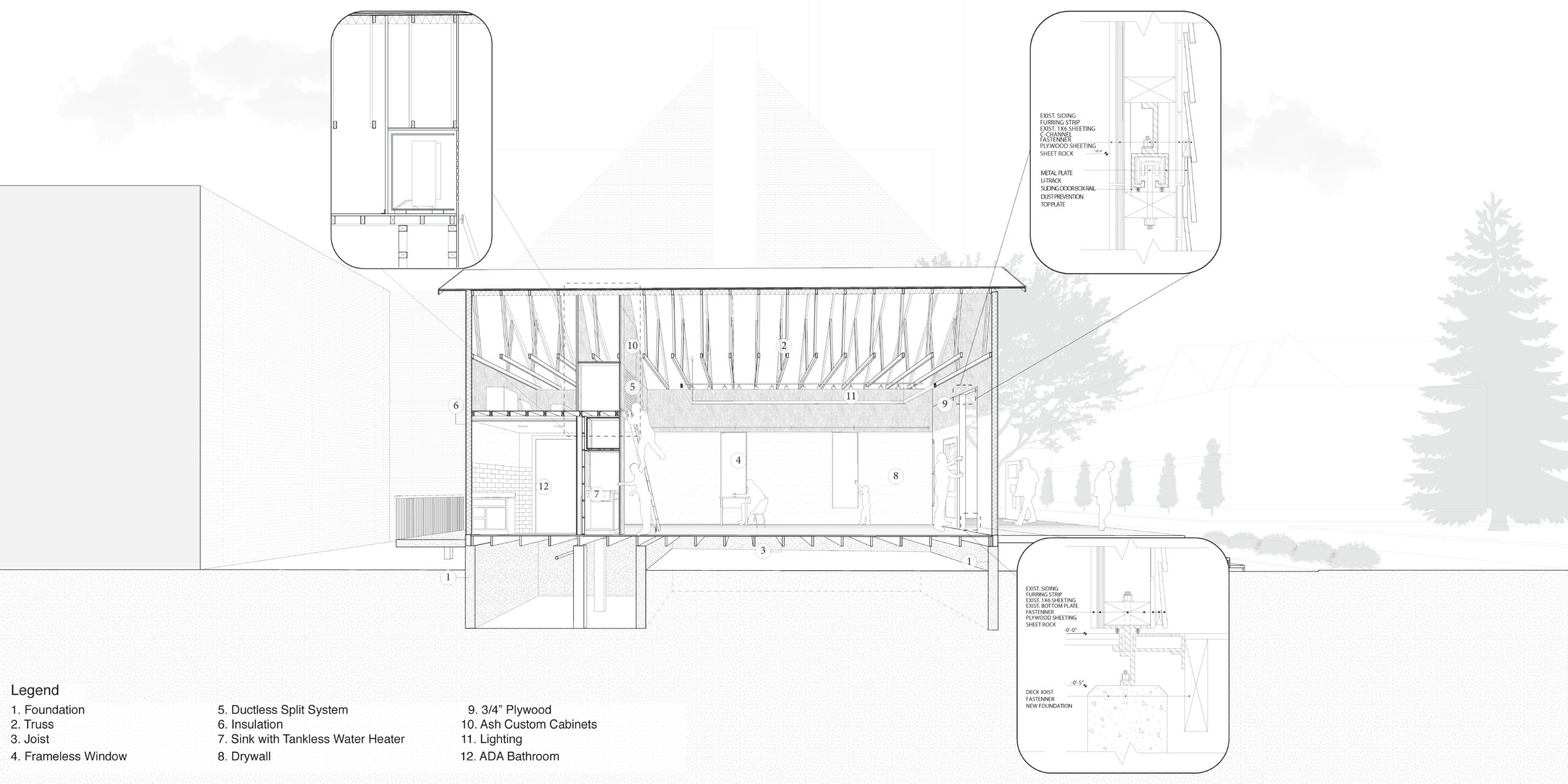


Details make the project: the Art Chapel includes many subtle, often hidden details that improve functionality, simplify aesthetics, and reinforce the “build nothing” ethic of adaptive reuse.
Students engaged directly with both the client and the community, exploring how architectural restraint could reduce the anxieties often experienced by those from disadvantaged backgrounds. This ethos informed each design-build activity, as students refined skills in cabinetry, steelwork, and embedded services—all executed with precision and restraint.


