One Piece at a Time – A Co-Creational Speculation on Mass Timber in North America
Location
University of Nebraska Lincoln
Sponsors
Timberlyne and Multiple Universities
Partners
Bradford A Watson, Robert Williams AIA, Munkaila Musah PhD, Krissy Harbert, Amanda Rawlings, Sree Pillarisetti, Zhen Xiao Yang, Nicholas Wickersham, James Tate, John Folan, Mary Beth Mashburn, Corey Booth, Colleen Stokes,
Students.
Matthew Blome, Grant Wolfe, Kayden Lichtas, Michael Evnen, Kayla Hans,Kayla Sidik, Alyssa Foertsch, Octavio Ortega, Adele Wan, Amelia Hernandez- Torres, Lindsay Poe, Daniel Velasquez, Isabella Woodhead, Jeremiah Seger, Sanaa Oliver, Luke Ellefson,Charlie Garretson, Ukasha Tibu Mohammed, Jack Rivers, Wrileidy Lopez Burgos, Sam Hochberger, Ruth Saenz-Ruiloba, Lauren Faulkner-Duncan, Lily Kaplaniak
One Piece at a Time – A Co-Creational Speculation on Mass Timber in North America
Associate Professor Jason Griffiths
When Jonny Cash sang “One Piece at a Time”, he sang about a factory worker who builds a car from individual parts that he steals from a production line. Over several years, he has assembled the kind of car he would otherwise never have been able to afford on his wages. Like the song, the car is a montage of individual pieces that champion adaptability, resourcefulness and speculative design.
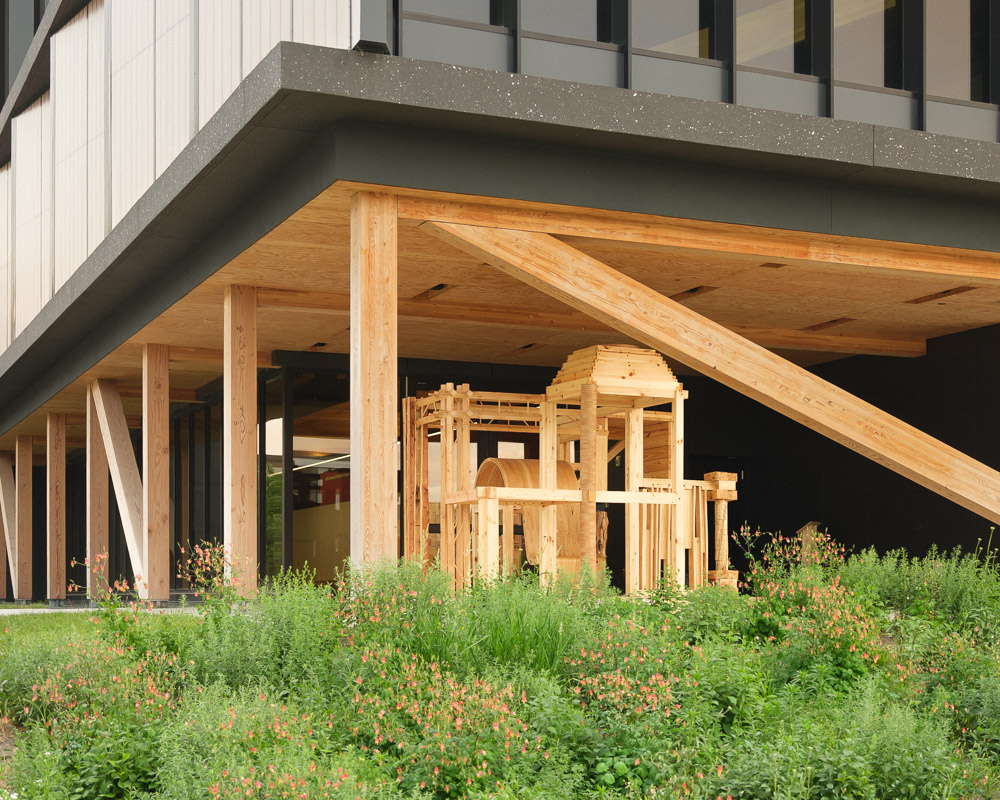
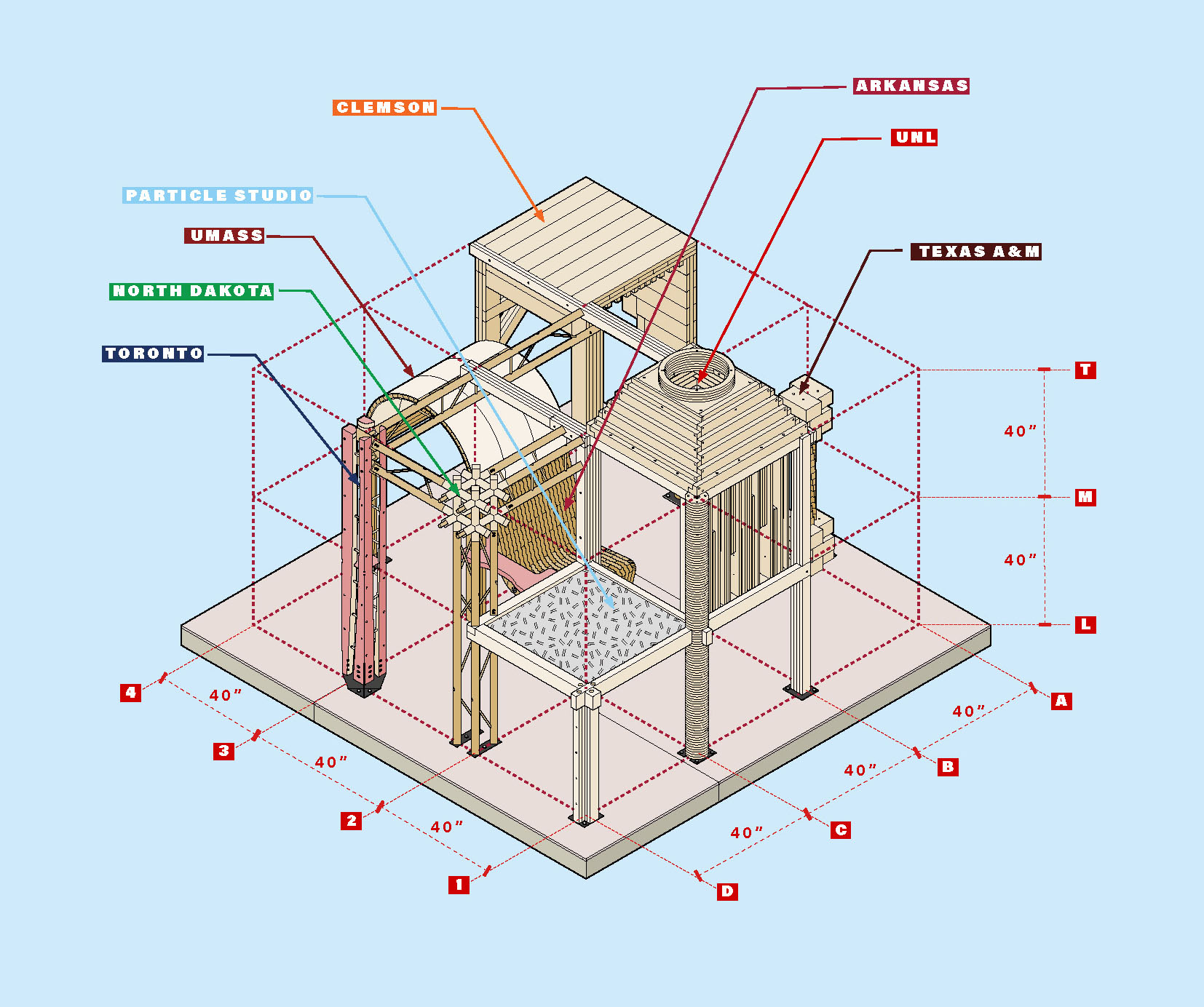
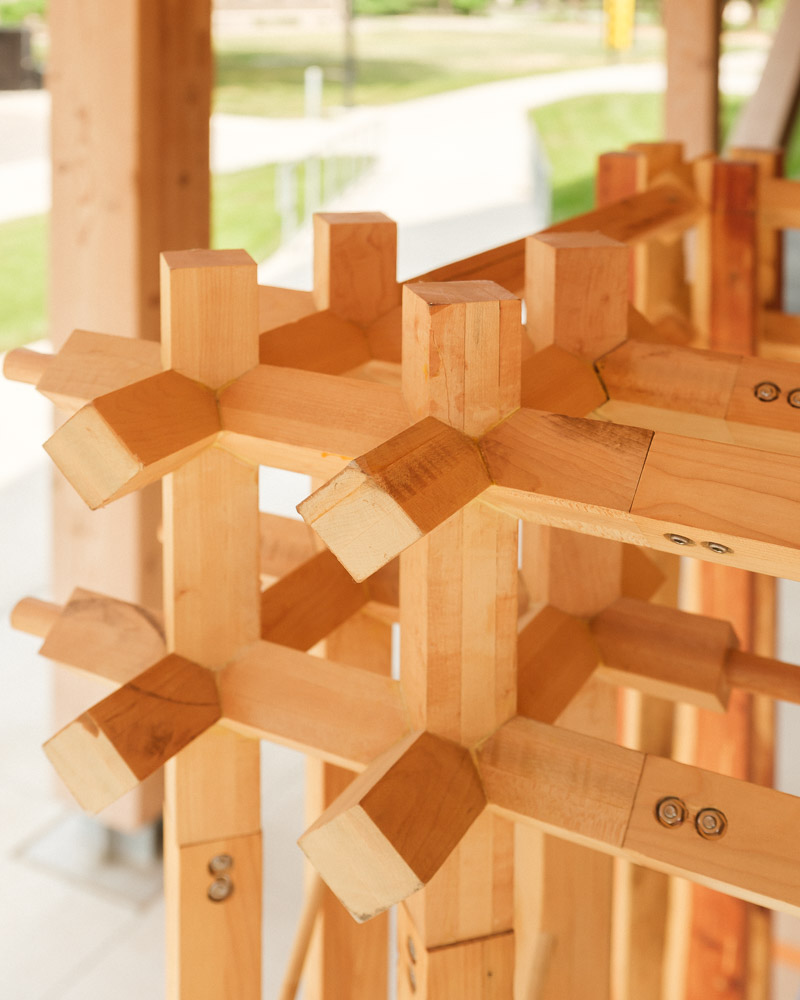
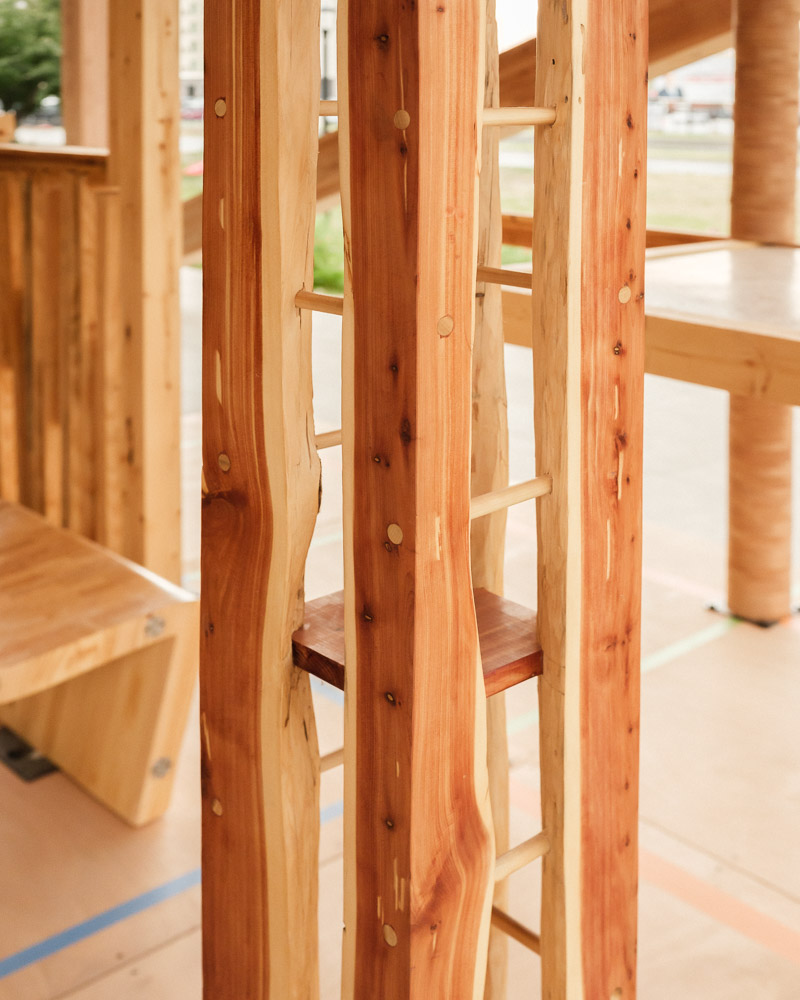
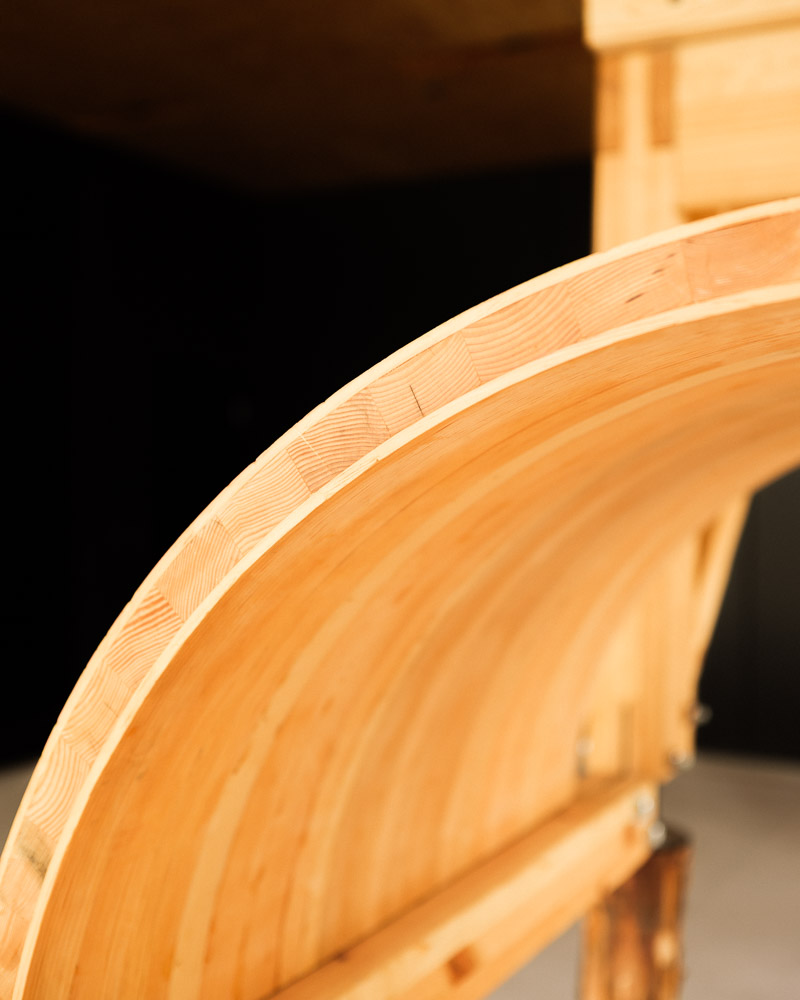
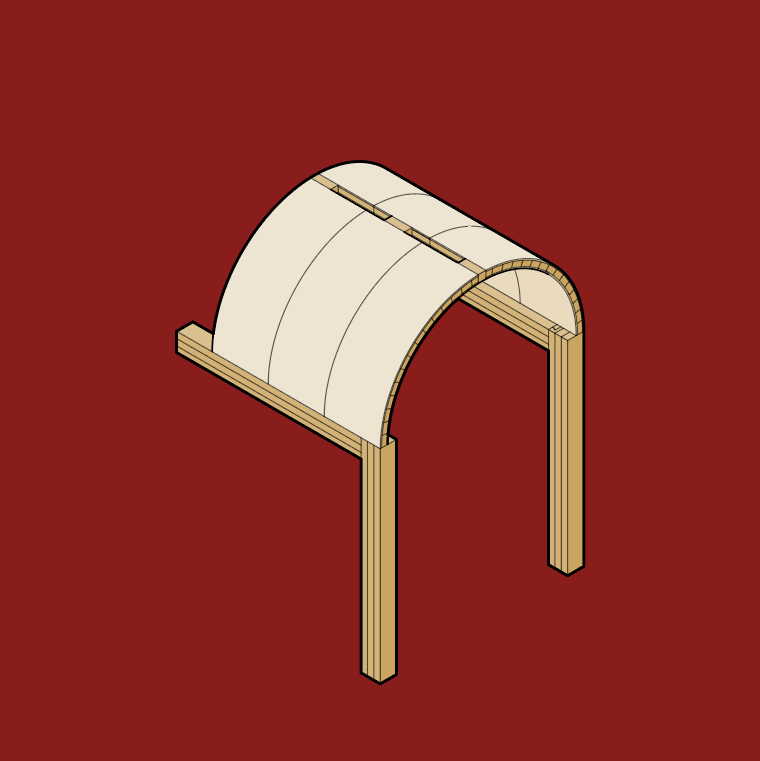
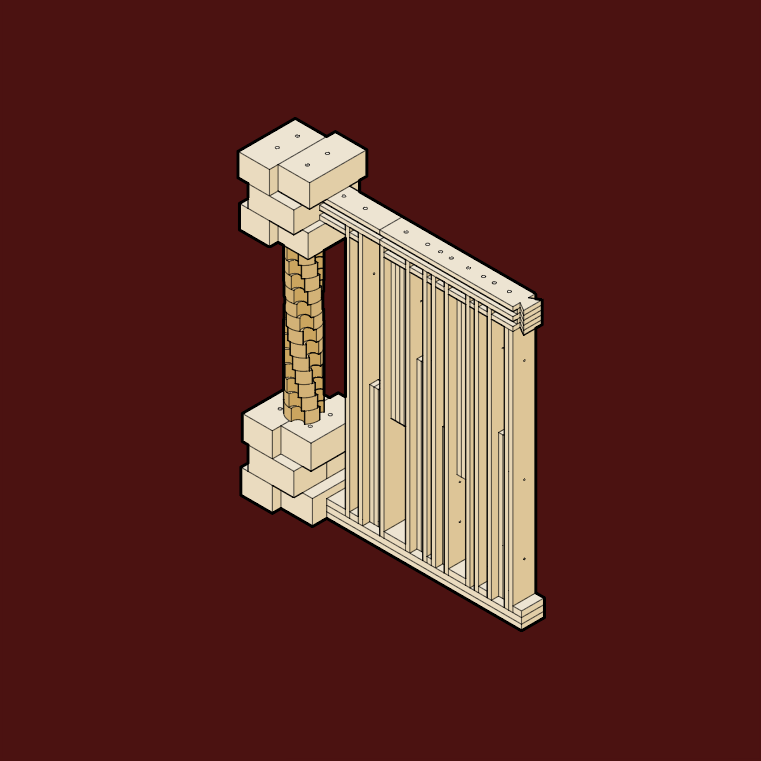
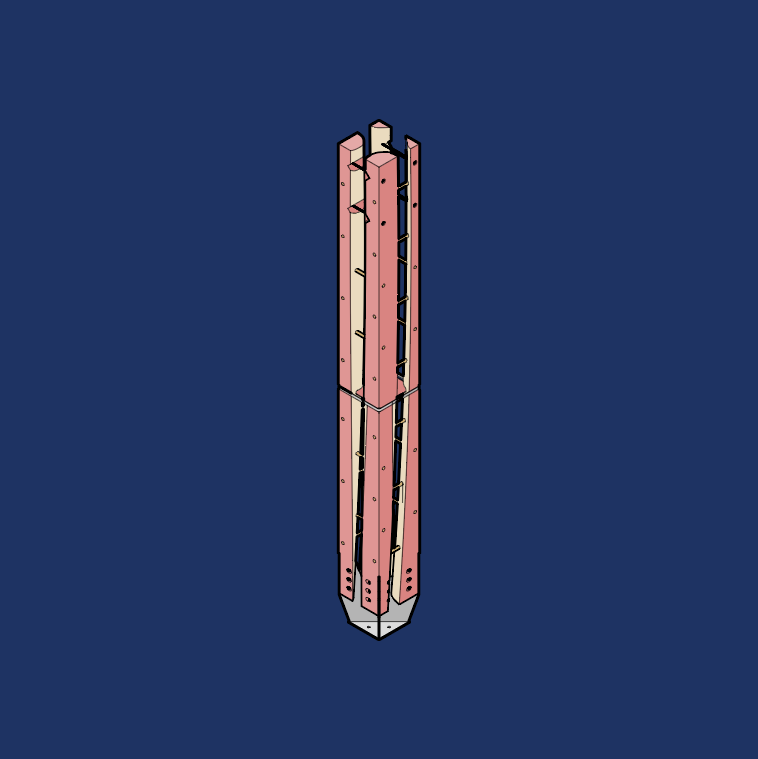
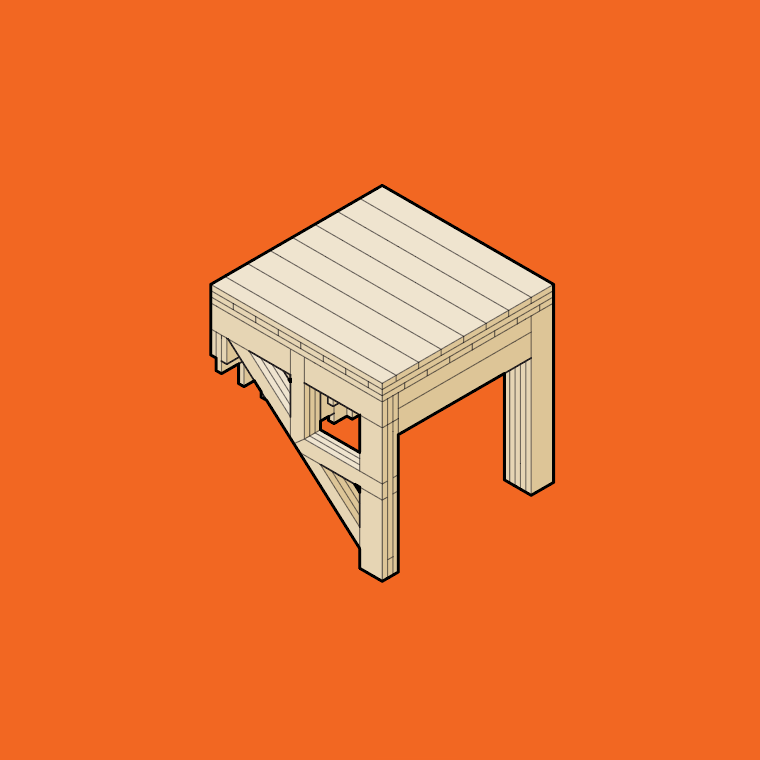
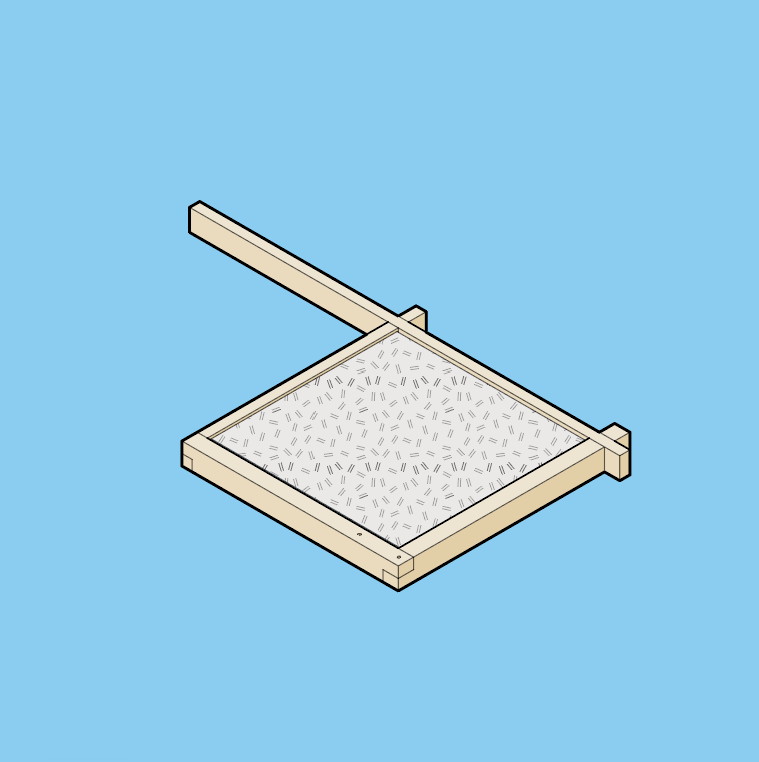
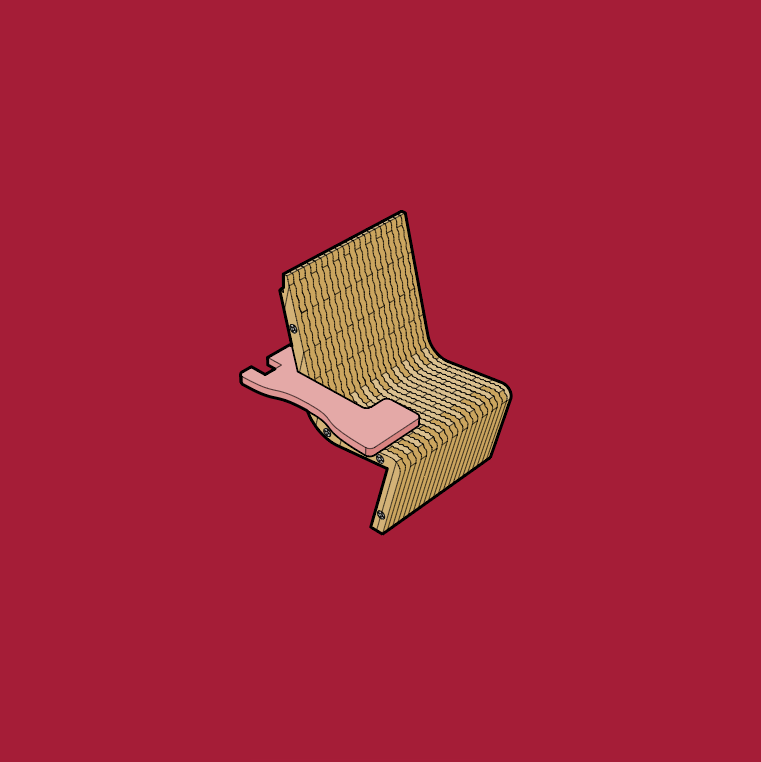
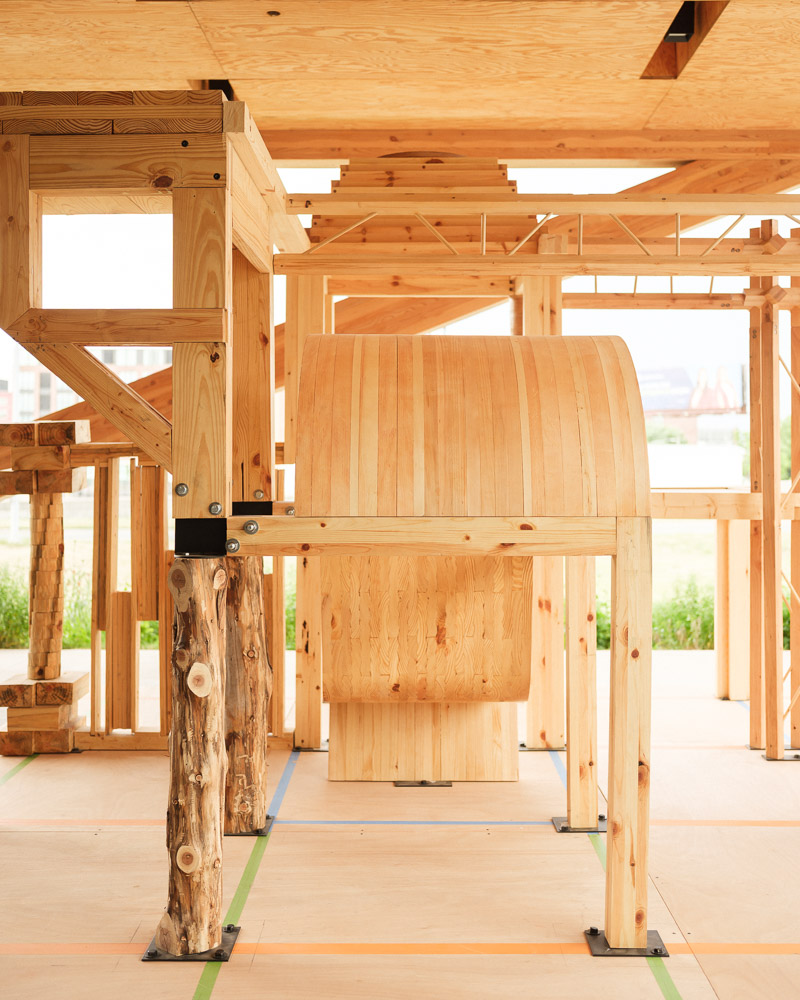
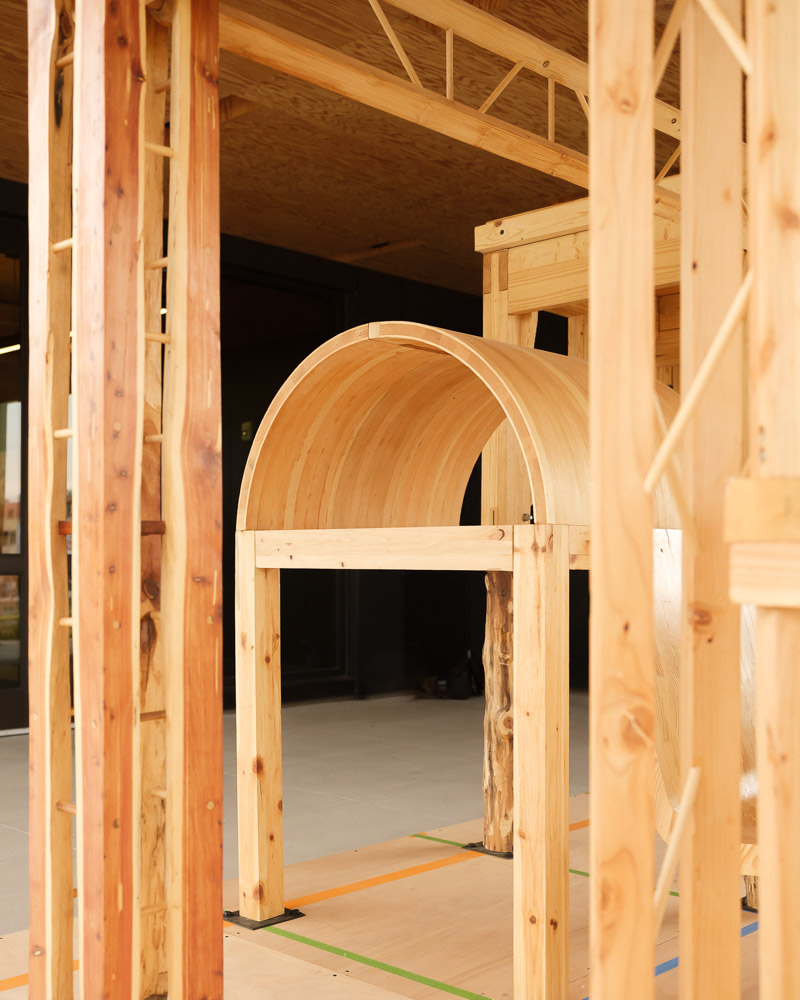
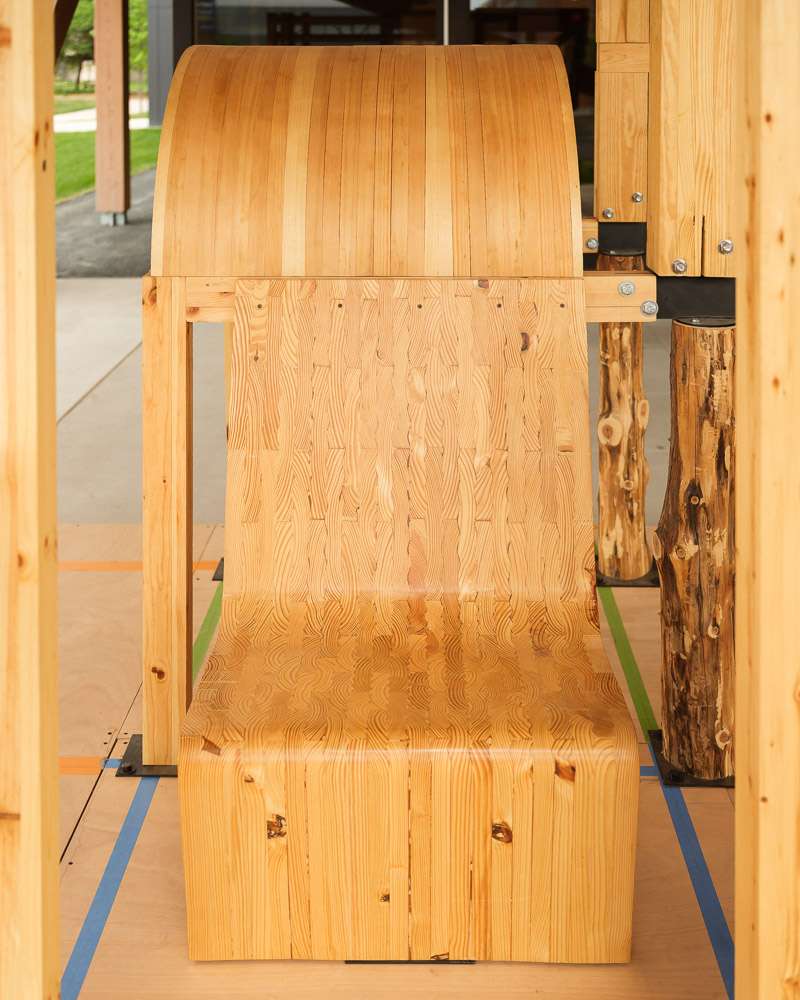
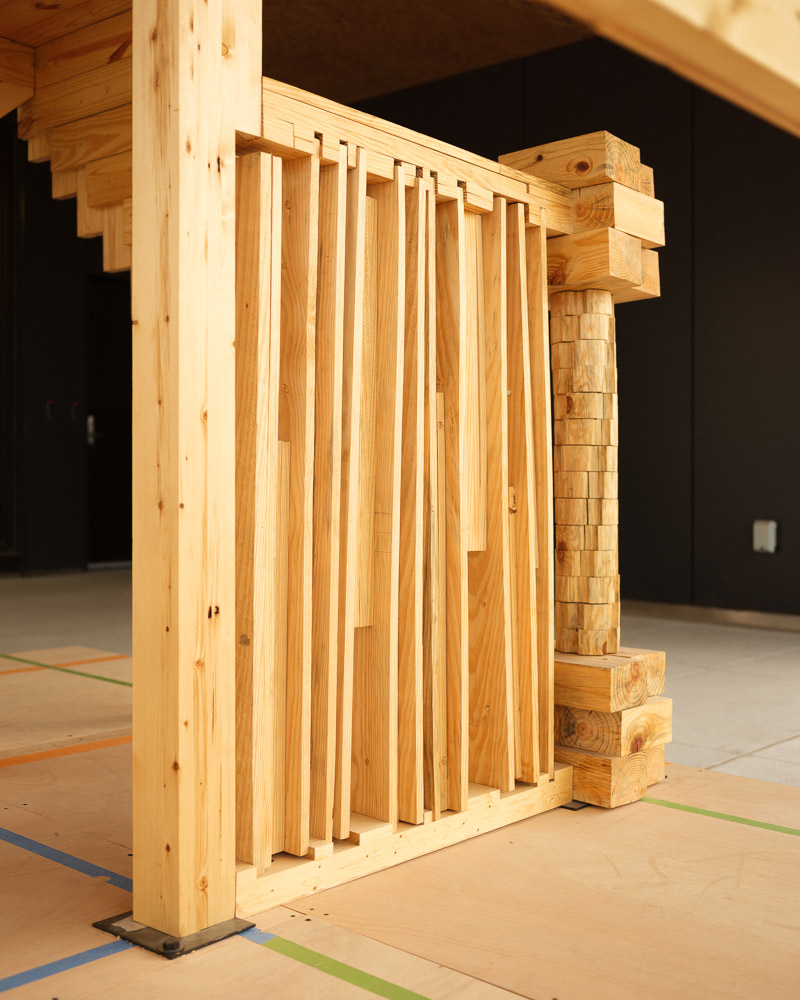
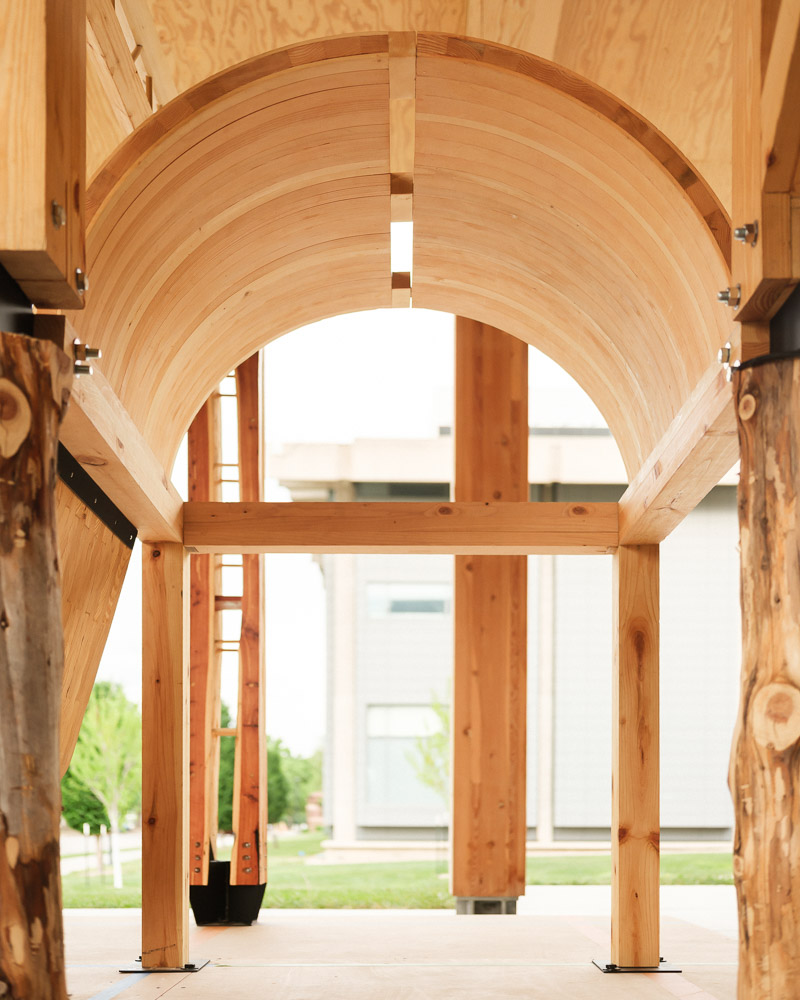
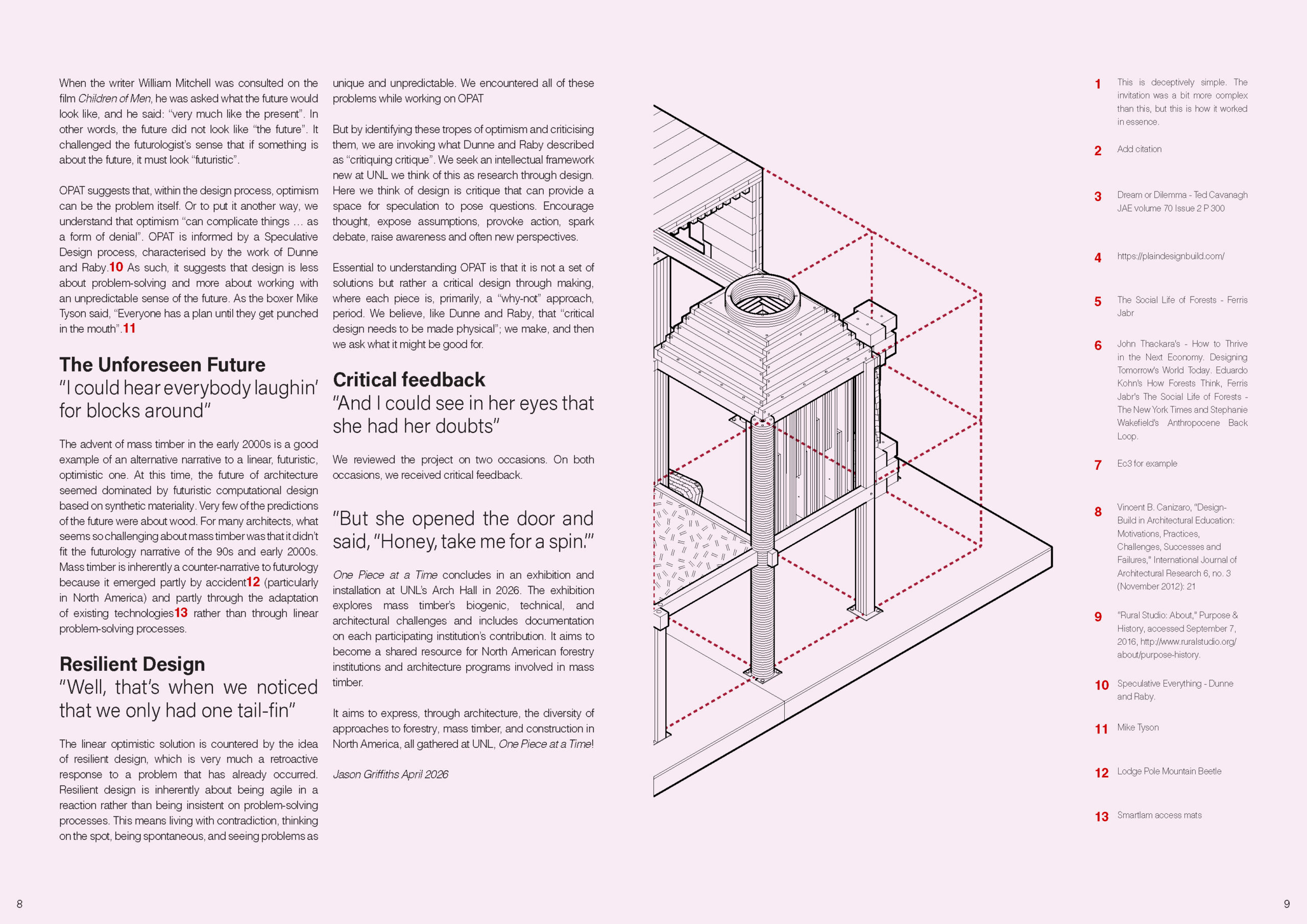
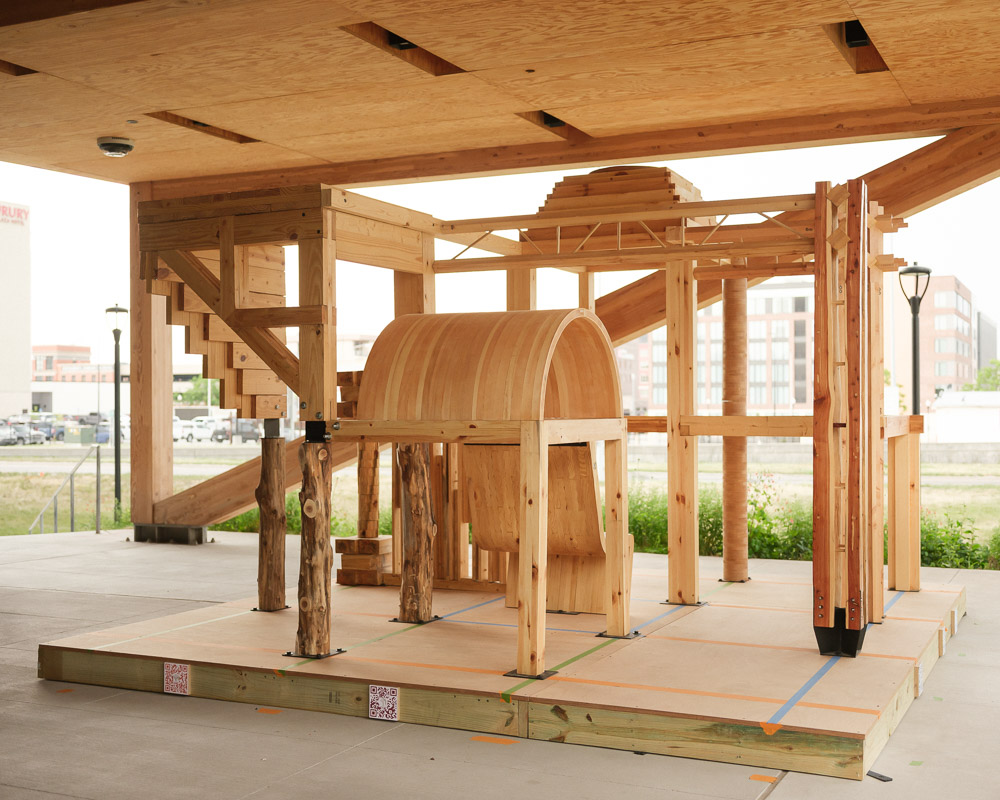
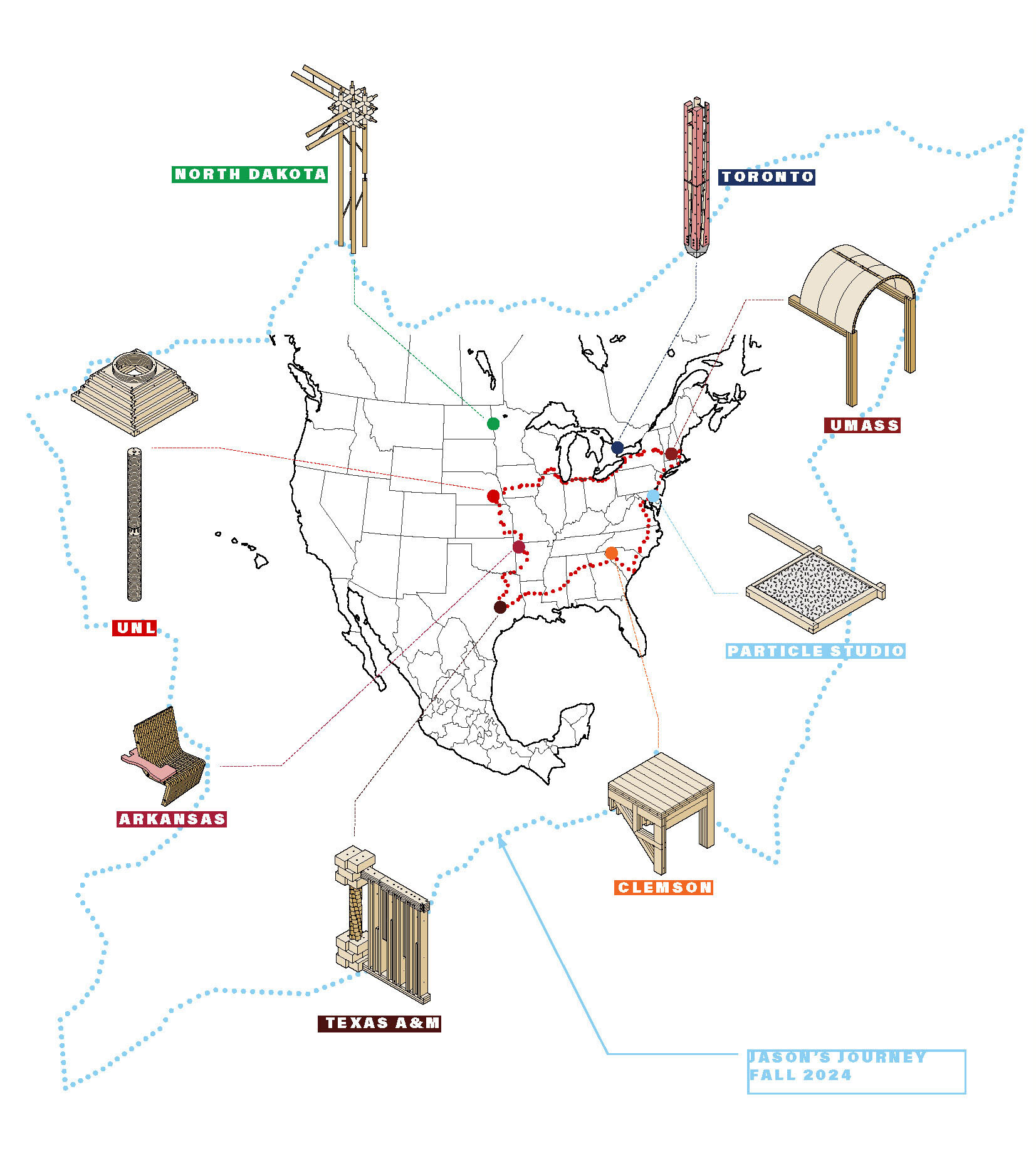
One Piece at a Time – A Co-Creational Speculation on Mass Timber in North America (OPAT) is an architectural assemblage of mass timber components sourced from universities and fabricators across North America. It is a co-creational installation that brings together diverse approaches to mass timber, inviting multiple participants into a discourse on how we build with wood. It aims to express, through architecture, the diversity of approaches to forestry, mass timber, and construction in the USA.
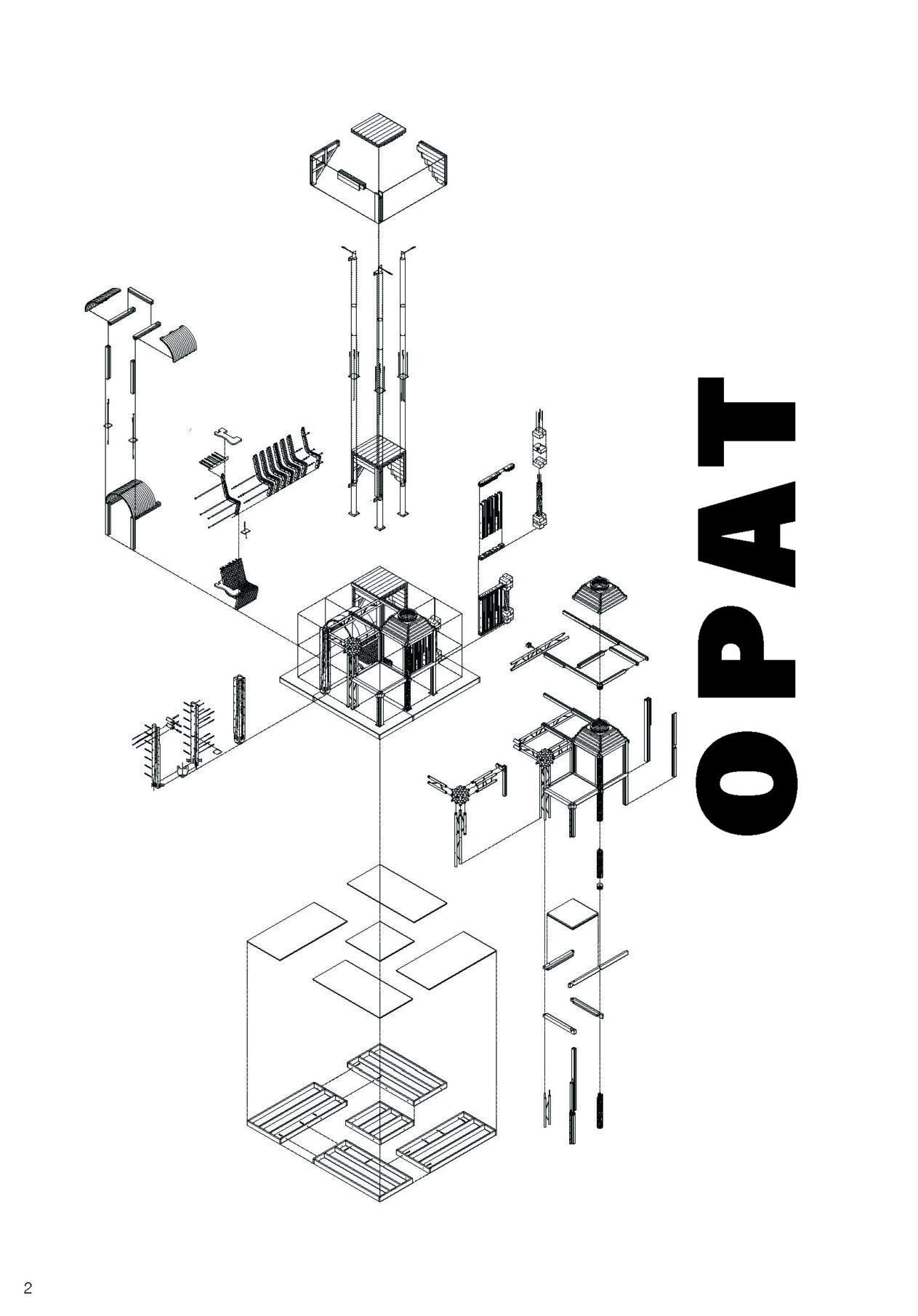
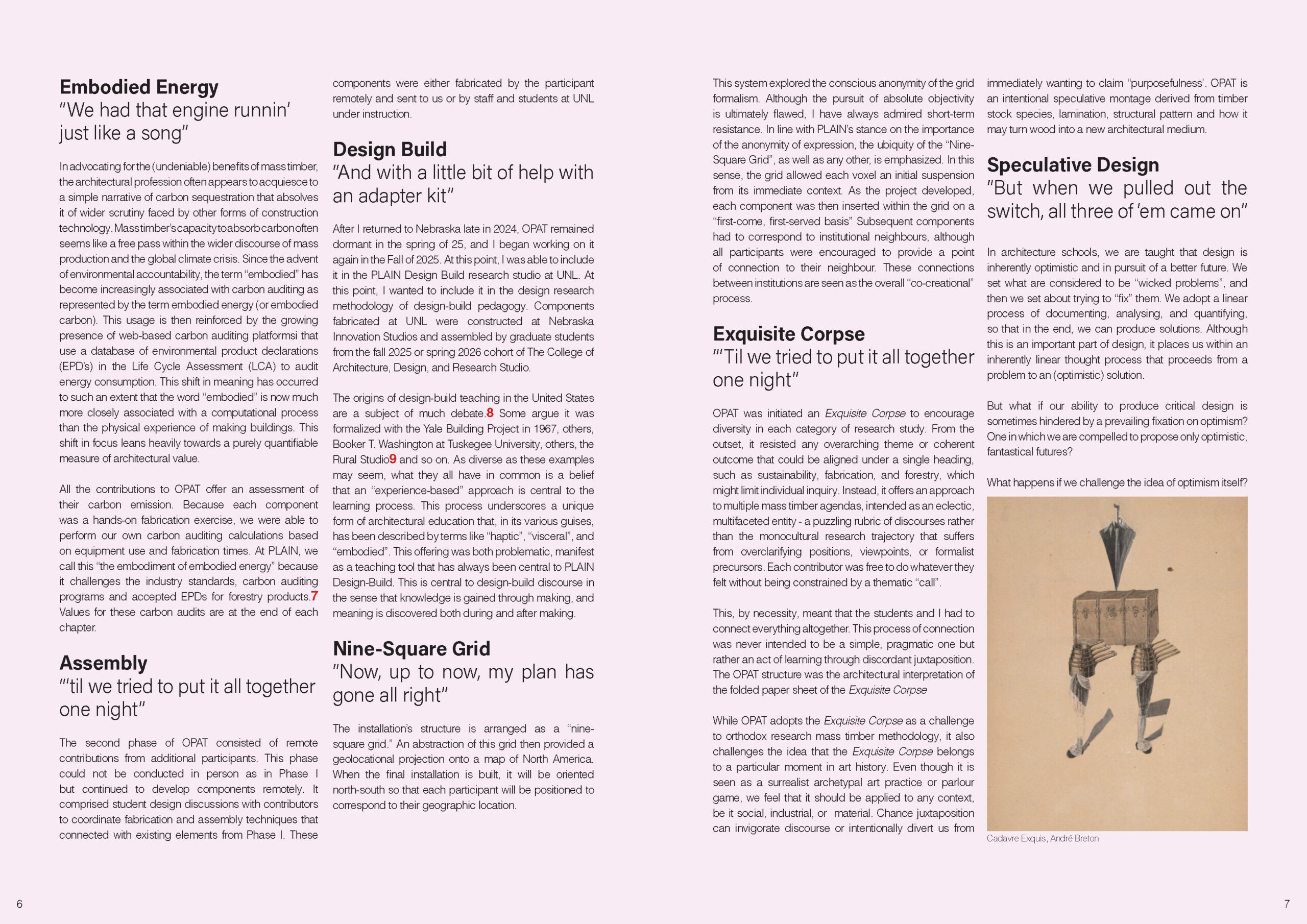
OPAT is based on the Exquisite Corpse to encourage diversity in multiple categories of research study. From the outset, it resisted any overarching theme or coherent outcome that could be aligned under a single heading, such as sustainability, fabrication, and forestry, which might limit individual inquiry. Instead, it offers an approach to multiple mass timber agendas, intended as an eclectic, multifaceted entity – a puzzling rubric of discourses rather than the monocultural research trajectory that suffers from overclarifying positions, viewpoints, or formalist precursors. Each contributor was free to do whatever they felt like, and we gathered them in Nebraska for an installation called One Piece at a Time.